Science & Nature
Record-Tying 22 Tornadoes Confirmed So Far From Monday’s Storm, Including 3 in Chicago. Is This the New Normal?
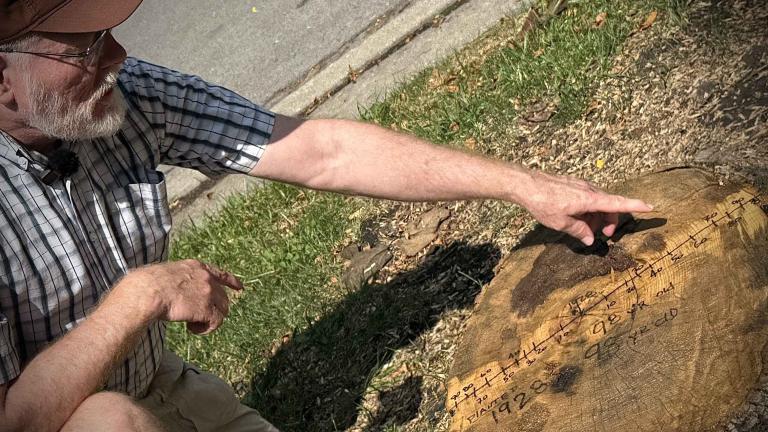
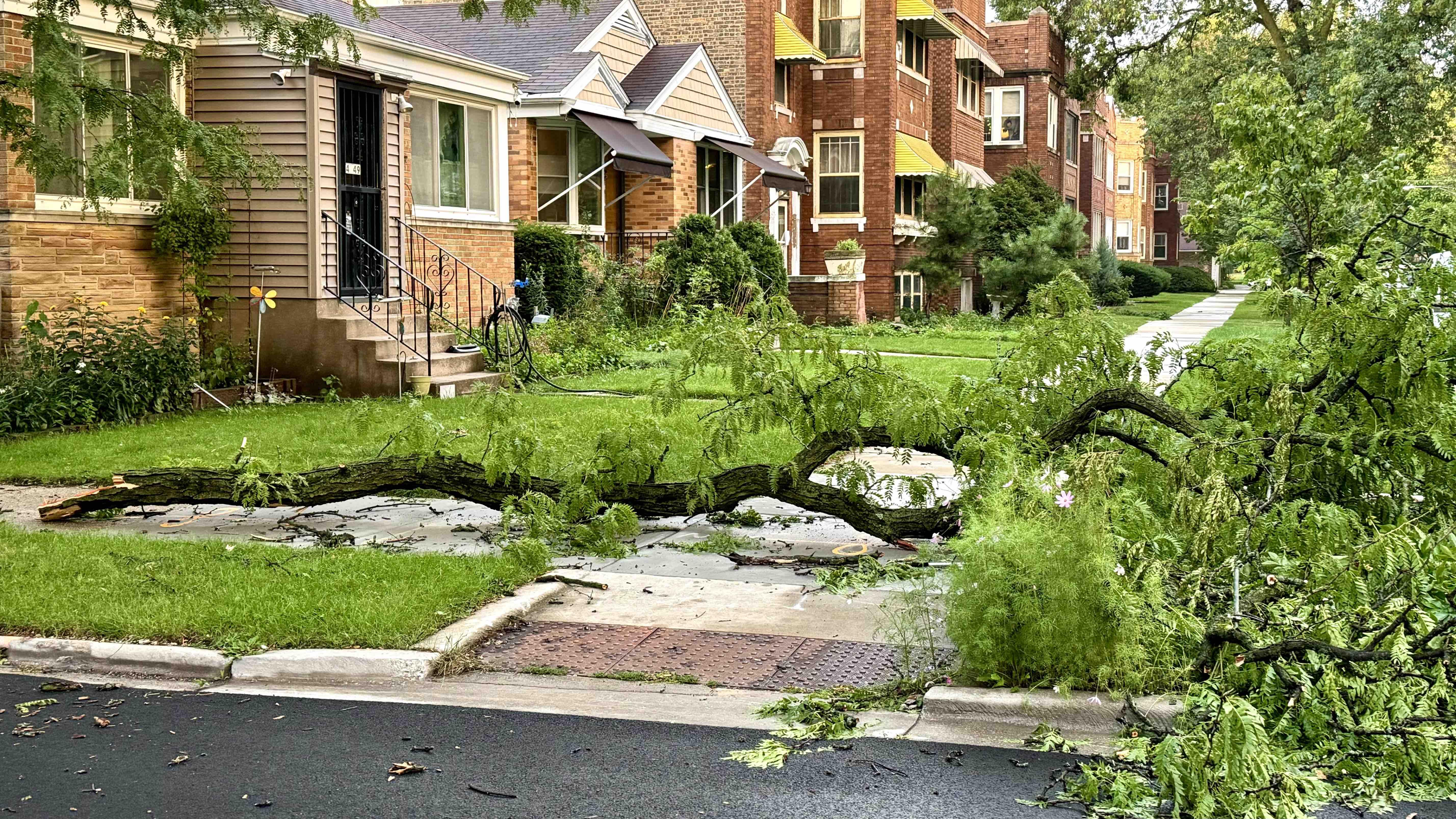 Chicago’s Department of Streets and Sanitation has received nearly 5,000 tree emergency calls since Sunday. (Patty Wetli / WTTW News)
The Chicago office of the National Weather Service has so far confirmed 22 tornadoes struck northeast Illinois and northwest Indiana on Monday night, a tally that could continue to rise as survey crews are still in the field investigating damage at numerous additional sites across the region.
The latest total includes confirmation of a third tornado within Chicago’s city limits, this one tracking from Humboldt Park to West Town (see paths below).
The number of tornadoes ties the Chicago office's record in its forecast area, matching prior events in June 2014 and March 2023, the weather service said.
Monday’s powerful storm has been declared a “derecho event,” a term most Chicagoans likely first became familiar with in 2020, when a derecho tore through the city, damaging some 12,000 trees. (For comparison, Chicago’s Department of Streets and Sanitation has logged 4,900 tree emergency calls related to this week’s storms.)
A derecho — sometimes likened to an “inland hurricane” — is defined as a long-lived, widespread swath of particularly damaging thunderstorms, covering at least 250 miles, with wind gusts of 58 miles per hour at minimum, explained David King, a meteorologist with the Chicago office of the National Weather Service.
“This derecho also had embedded tornadoes,” King said, which are characterized by funnel clouds and wind rotation.
The event started in Iowa and southern Minnesota, with systems merging in Illinois and moving across the state into Indiana and Michigan, he said.
A separate storm on Sunday spawned six tornadoes, two of which blew through Chicago, shaking many residents’ long-held, if incorrect, belief that twisters can’t strike the city.
With Illinois having led the nation in the number of tornadoes recorded in 2023, the question becomes, is this the new normal, a signal of climate change, or an aberration?
There are a number of factors at play, King said, and not all of them are weather- or climate-related.
For one, he said, urban sprawl has pushed people into previously undeveloped, unoccupied rural areas, meaning there are now human witnesses to storms and storm damage that may have previously gone unnoticed.
At the same time, meteorologists have more advanced technology at their disposal, giving them a clearer picture of what’s happening in the atmosphere, including radar-identified wind rotation. This has led to more accurate warnings and alerts, as well as an ability to better pinpoint where to look for tornado damage when conducting post-event surveys.
So have there actually been more tornadoes spawned in recent years, or have we just gotten better at spotting them?
Short of traveling back in time to assess past weather with today’s forecasting capabilities, King said, there’s no way of knowing.
“Was it happening?” he asked. “That would be speculation.”
Here are the reports from the National Weather Service on the paths of Chicago’s tornadoes, plus others confirmed throughout the region, and the areas still under investigation:
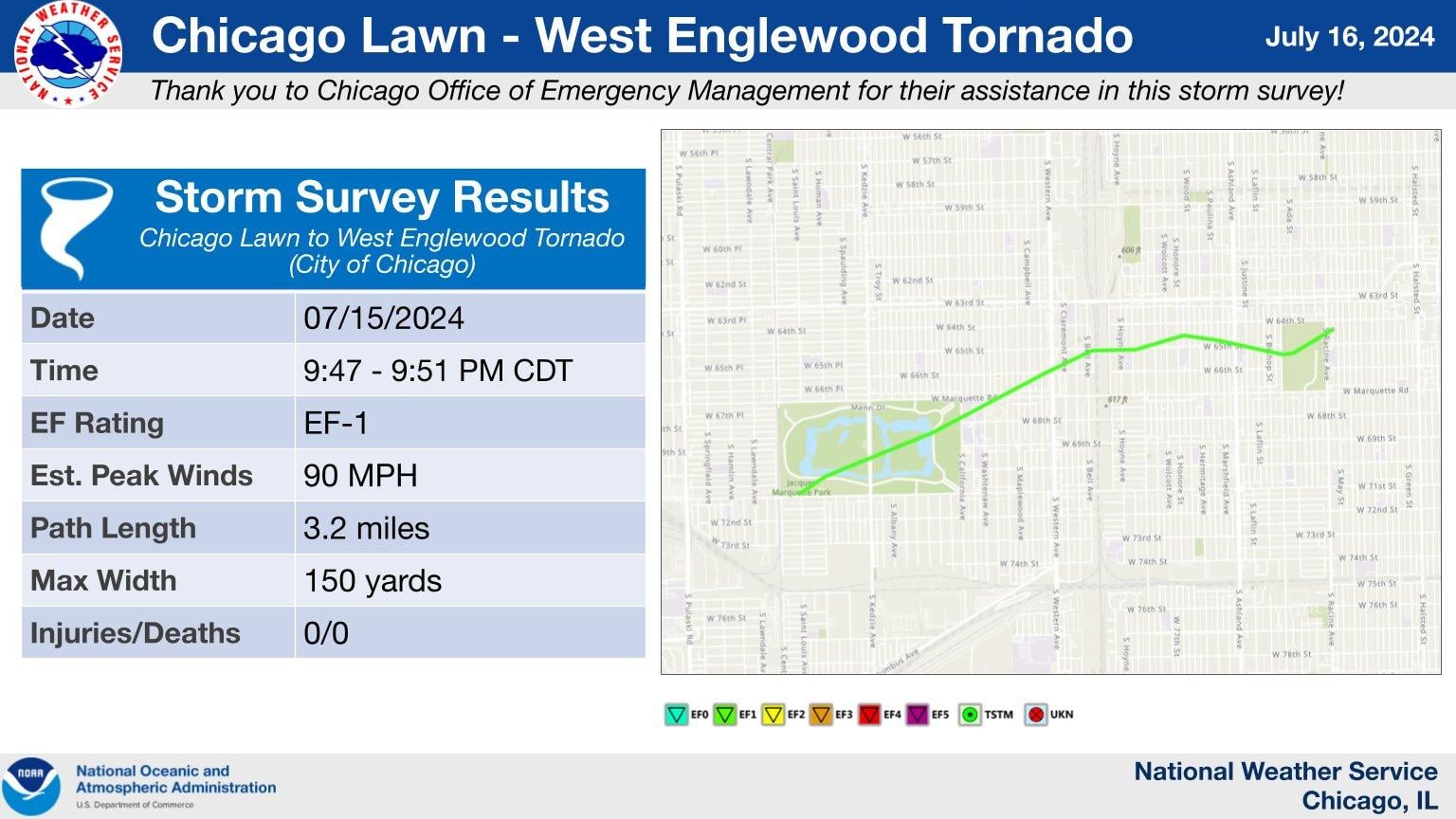 (National Weather Service)
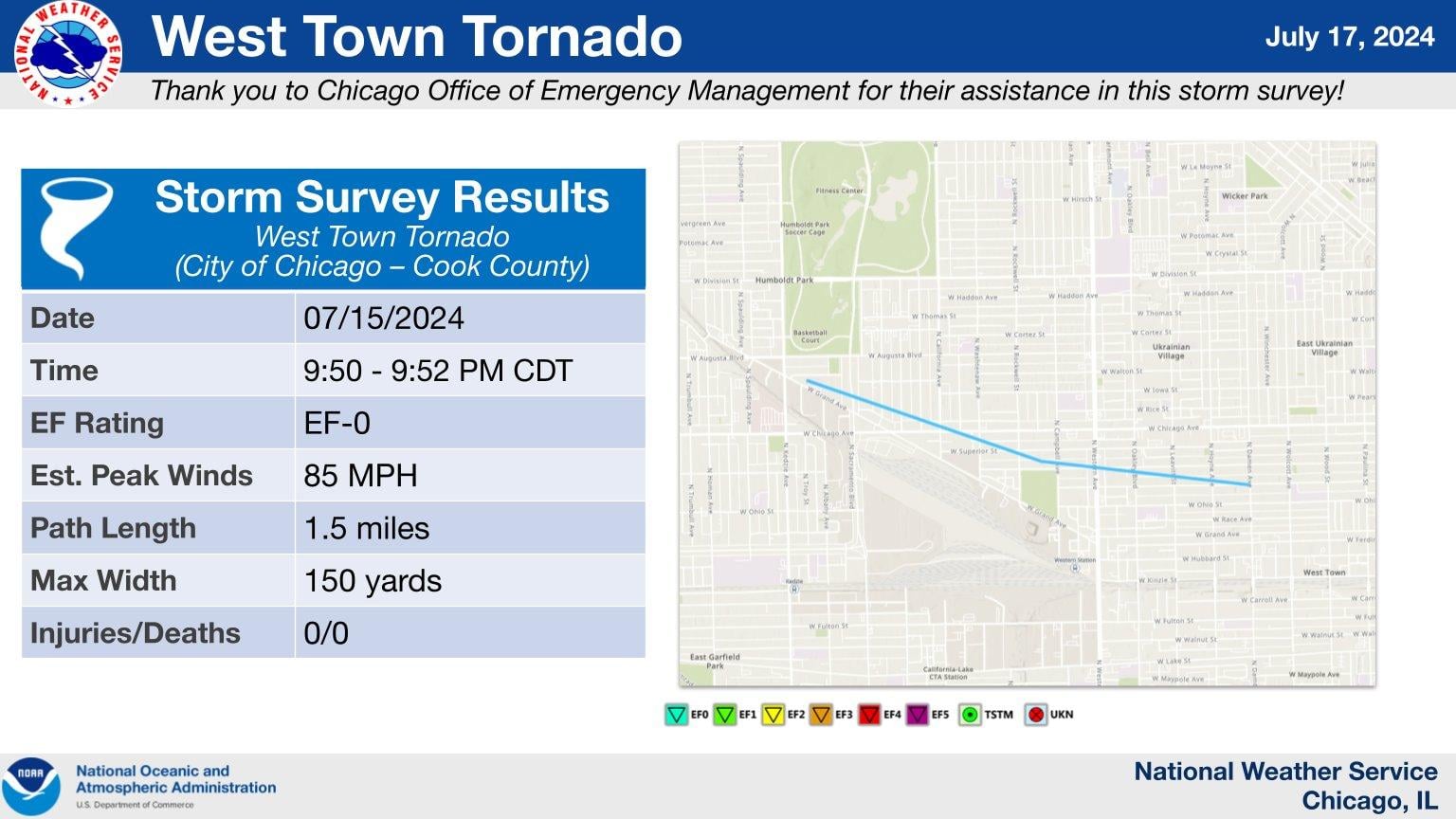 (National Weather Service)
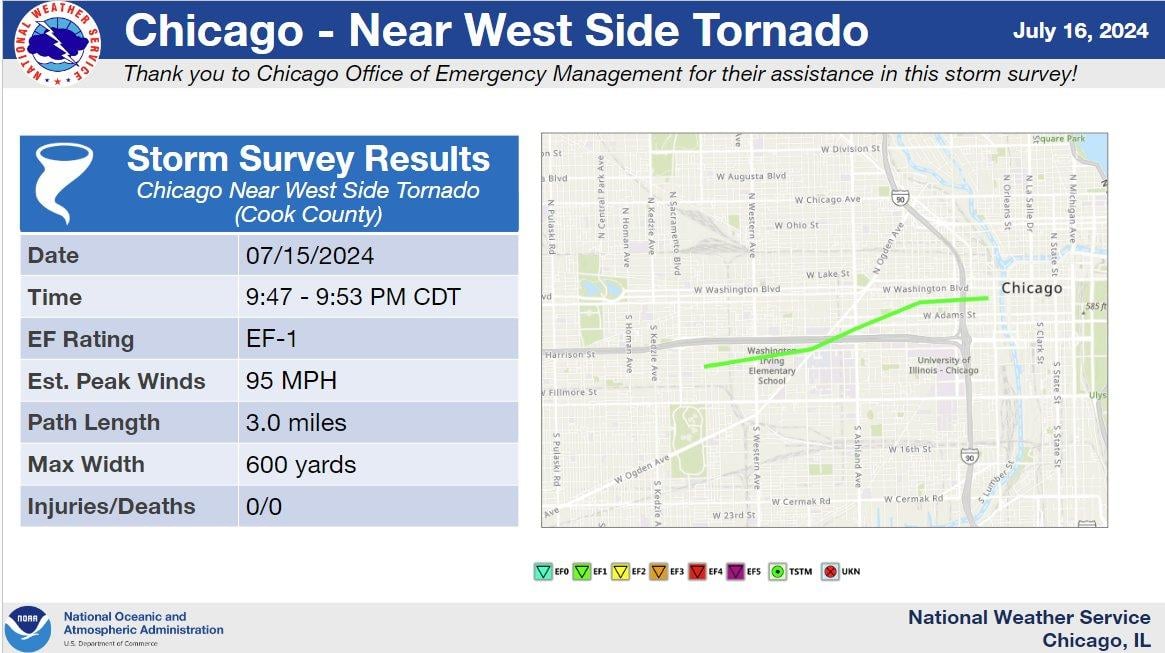 (National Weather Service)
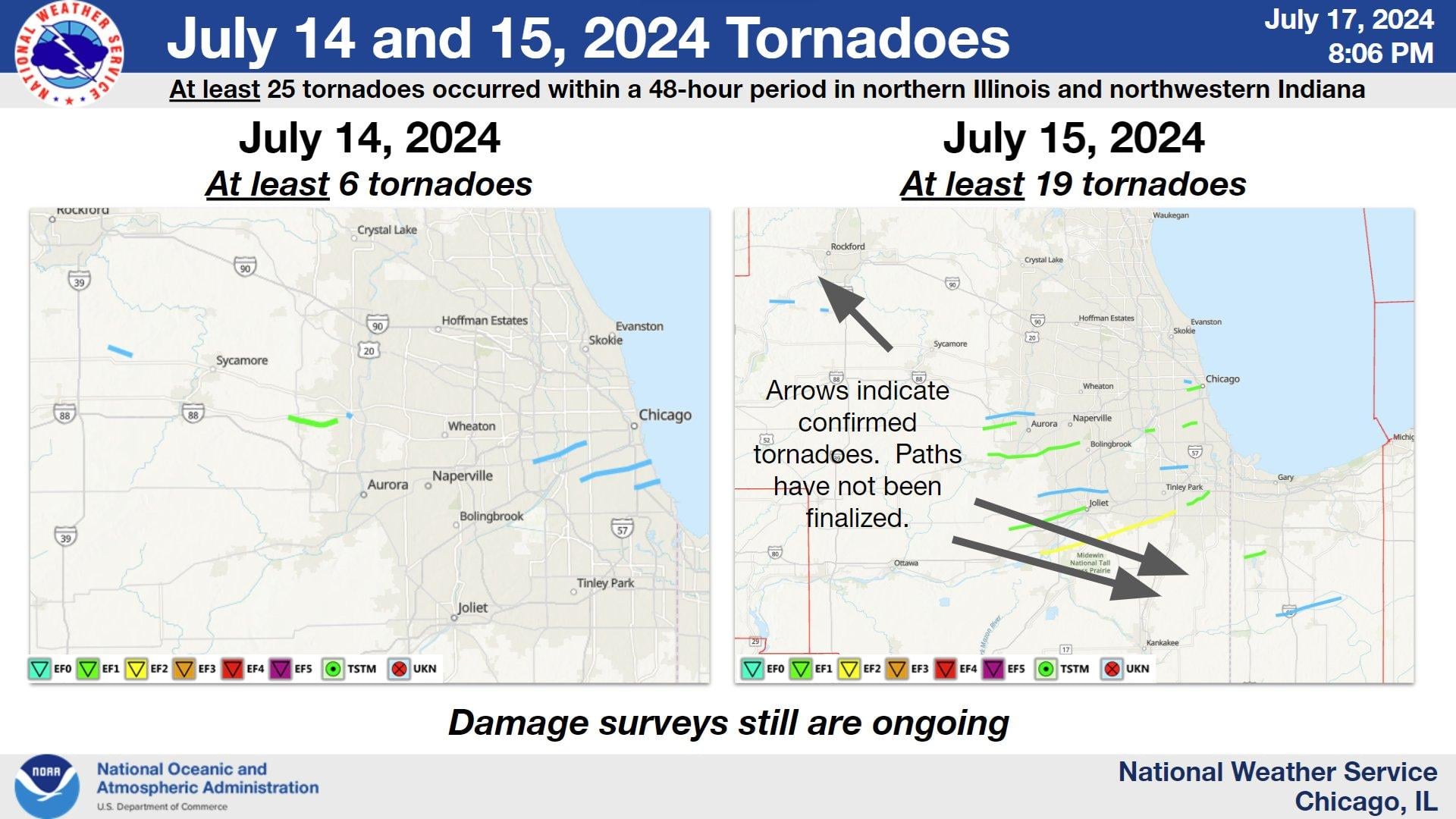 (National Weather Service)
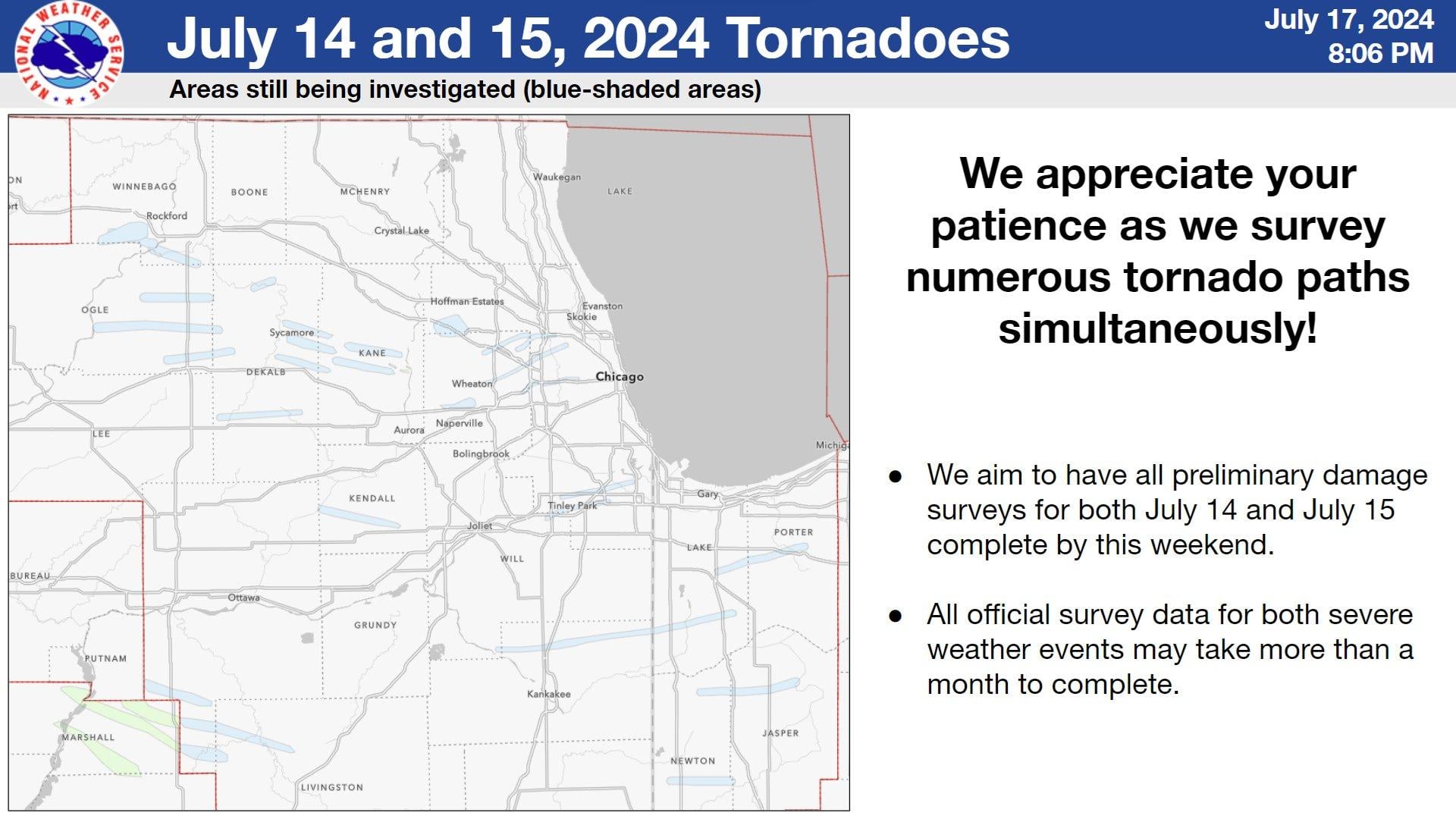 (National Weather Service)
This article originally published July 18 and has been updated with new information.
Contact Patty Wetli: @pattywetli | (773) 509-5623 | [email protected]